Property Valuation in Estonia: Practical Guide
A practical guide to how property valuation works in Estonia, when you need a formal appraisal, and how to use data-backed estimates before you commit.
On this page10 sections · 4 min read
What property valuation means in Estonia
Property valuation is the process of estimating what a property is worth in the current market, based on the information available at the time.
In Estonia, buyers often encounter valuation in one of two ways:
- as an early planning question before making or revising an offer
- as a formal requirement in a mortgage or refinancing process
Those are not the same use case. A planning estimate and a formal appraisal answer related questions, but they are used differently.
Why buyers and owners care about valuation
Valuation matters because the asking price alone is not enough.
A buyer wants to know whether a property is roughly in line with the market. A homeowner wants to know how the property is positioned today and what may be driving that position. A bank wants a formal professional document before taking lending risk.
That means the useful valuation question is not only “what is the number?” It is also:
- what is pushing the number up or down?
- how confident should I be in it?
- what should I verify next?
The main valuation methods
Different valuation methods emphasize different evidence.
Comparable market evidence
This approach looks at similar properties and recent market context. It is often the easiest method for users to understand because it stays close to real transaction behavior.
Its weakness is that no property is a perfect match. Differences in condition, building quality, and exact location still matter.
Cost-based logic
This looks at what it would take to recreate the asset, adjusted for depreciation and condition.
It can be useful when a property has unusual physical features or when market comparables are limited, but it can also overstate reality if market demand is weak.
Formal appraisal process
When a bank or institution needs a formal valuation, a certified professional process becomes the key method, because the output must be documented and usable in that formal setting.
When you need a formal appraisal
In practice, a certified appraisal is usually needed when:
- a mortgage lender requires it
- you are refinancing
- the transaction or legal process needs formal valuation documentation
This is why buyers should stop thinking in terms of “estimate versus appraisal.” The real question is timing.
Use a data-backed estimate to prepare. Use the certified appraisal when the process requires professional documentation.
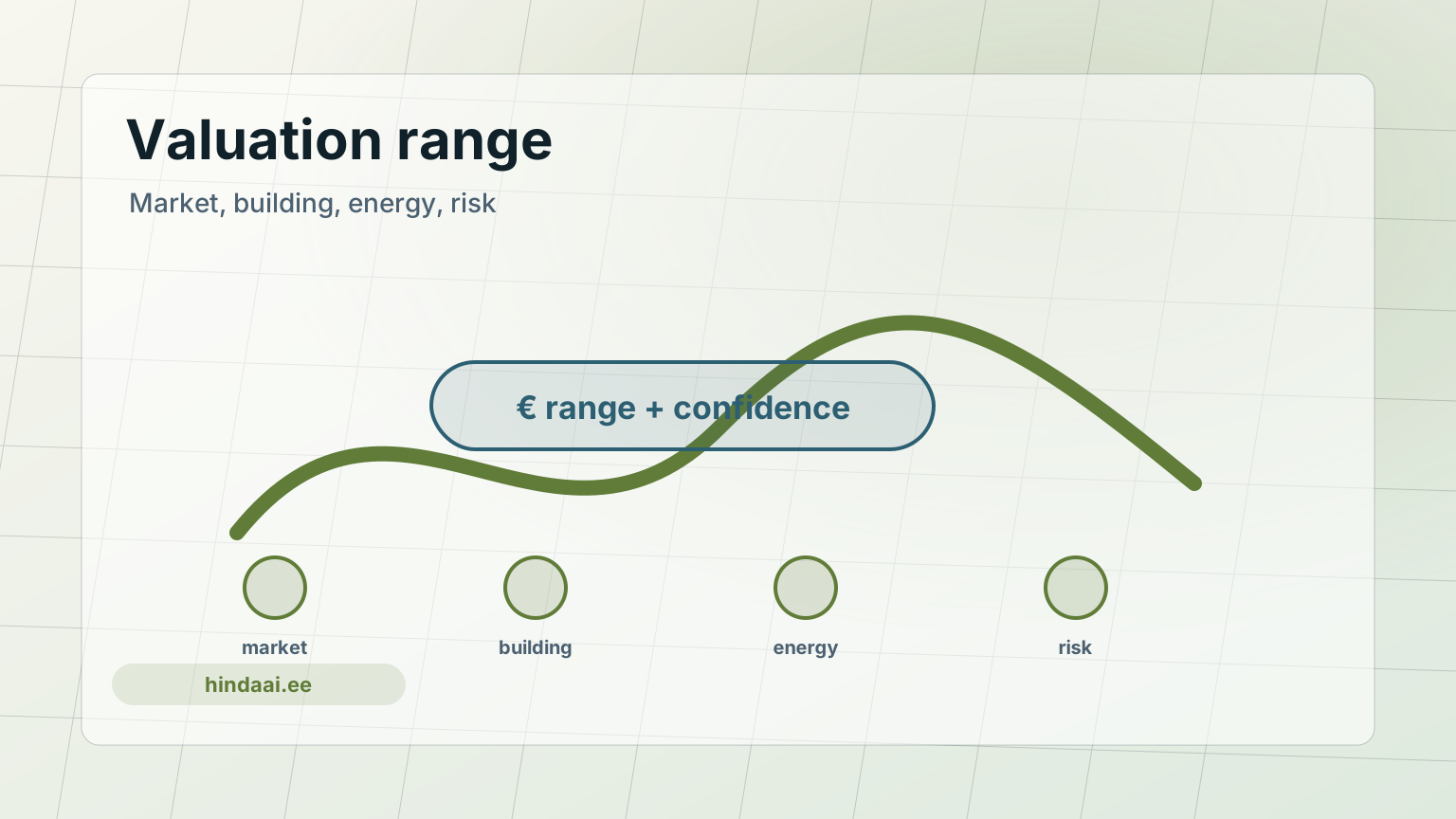
What affects value the most
Buyers often assume value is driven only by size and finish. In reality, several categories matter at once.
Location and micro-location
District, street quality, transit access, nearby services, noise, and future development all affect how a property is experienced and priced.
Building condition
Building age, renovation history, structural risk, and maintenance exposure can change value materially.
Energy performance
Energy label and heating profile matter because they affect running cost, future improvement burden, and buyer confidence.
Market timing
Broader market context changes negotiating power. Even a strong property may attract different pricing behavior in different market phases.
How to use a valuation before making an offer
For most buyers, the valuation workflow should look like this:
- Shortlist the property.
- Run a planning estimate and review the supporting context.
- Identify what looks strong and what still needs checking.
- Decide whether the property deserves the cost of the next formal steps.
- Move into the certified appraisal stage when the lender or transaction requires it.
This approach helps buyers avoid paying for certainty too early on weak candidates.
What valuation cannot do alone
Valuation is important, but it is not a substitute for all due diligence.
Even a good estimate does not replace:
- registry and ownership review
- building-specific technical checks
- apartment association context
- legal advice or transaction review
The best buyers combine pricing context with building, location, and process context.
Common buyer mistakes
The most common valuation mistakes are straightforward:
- treating the asking price as if it were neutral
- assuming every estimate should be used like a bank document
- skipping the building and location review because the number looks good
- ordering formal work too early for properties that should already have been removed from the shortlist
Good valuation practice is really good sequencing.
How HindaAI fits into the process
HindaAI should be used as a decision-support layer before or between formal steps.
It helps users move from curiosity to structured questions:
- Does this address look directionally priced?
- Does the building profile create risk?
- Does the neighborhood context support the price?
- Should I continue, renegotiate, or stop here?
That is a practical role, and it is a valuable one.
Final takeaway
Property valuation in Estonia is most useful when you match the method to the stage.
Use a data-backed estimate for early screening, orientation, and negotiation support. Use a certified appraisal when the bank or formal process requires it. If you keep those roles separate and complementary, valuation becomes a tool for better decisions instead of a source of confusion.
Sources
- LHV home loanlhv.ee
- SEB accepted appraisal bureausseb.ee
- Statistics Estonia dwelling price indexstat.ee
- HindaAI methodologyhindaai.ee
Prepared by HindaAI Team · Reviewed by HindaAI Editorial Review · Published March 8, 2026 · Updated March 8, 2026