Buying an Apartment in Estonia: Step-by-Step Guide
A step-by-step guide for buyers in Estonia covering budget, verification, valuation, and the practical checks to make before the notary stage.
On this page12 sections · 4 min read
Start with the right definition of “buying”
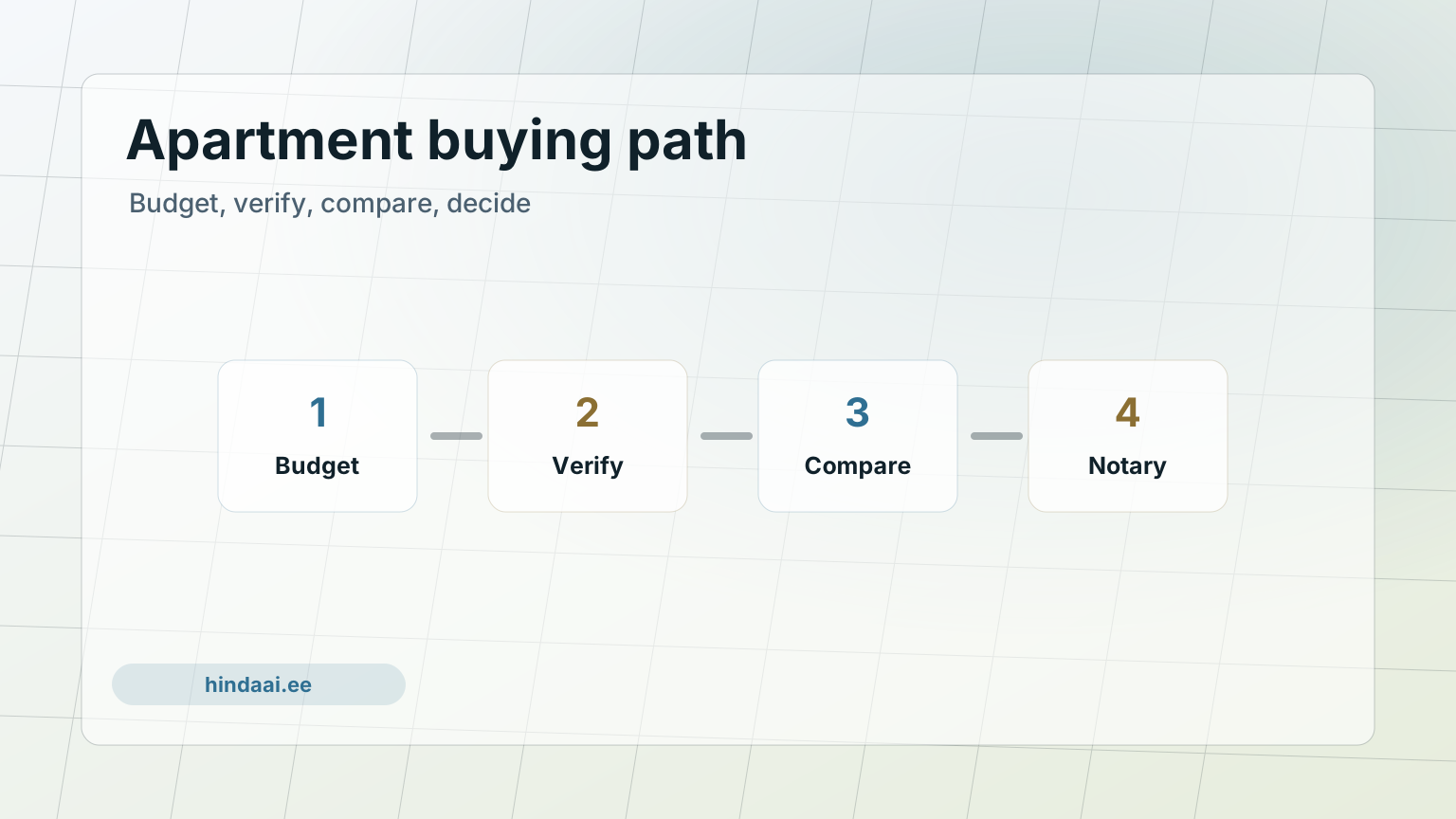
Buying an apartment in Estonia is not one decision. It is a sequence of smaller decisions:
- Can I afford this level of property?
- Is this specific apartment worth deeper work?
- Does the building and legal context support the listing story?
- Is the price still reasonable once I account for risk and future cost?
- Am I ready for the formal mortgage and notary stages?
Buyers usually get into trouble when they treat those steps as one emotional sprint.
Step 1: Set the budget before you fall in love with the listing
Start with financing reality, not listing fantasy.
You need to know:
- your price ceiling
- how much flexibility you have on down payment and monthly payment
- what level of renovation or running cost you can tolerate after purchase
This matters because the cheapest mistake is the property you reject early, not the one you discover is unaffordable after you have already invested time and money.
Step 2: Build a shortlist, not a wish list
A useful shortlist usually comes from constraints, not from aspiration.
Choose your non-negotiables first:
- location or commute pattern
- apartment size and room count
- building era or type
- acceptable energy and maintenance profile
Once you do that, the market becomes easier to compare rationally.
Step 3: Verify the object itself
Before you get attached to a property, confirm you are looking at the exact legal and physical object being offered.
Check:
- exact address and unit reference
- floor and entrance consistency
- whether the building and apartment details align across listing and official sources
It sounds basic, but it is one of the fastest ways to spot weak listing discipline.
Step 4: Check the building, not only the apartment
Apartment buyers often underestimate building-level risk.
The apartment can look freshly renovated while the building still carries expensive unresolved issues.
Review:
- building age
- energy profile
- recent or planned renovation
- facade, roof, and systems context
- visible maintenance burden
An attractive unit inside a weak building can become a very expensive compromise.
Step 5: Review registry and ownership context
The legal background matters before the notary, not only at the notary.
Questions to clarify early:
- who owns the property
- whether restrictions or encumbrances exist
- whether there are details that need explanation before the transaction proceeds
You are not trying to do the notary’s job. You are trying to avoid moving forward with unresolved questions that should already be visible.
Step 6: Evaluate price with context
The asking price should be stress-tested before an offer.
Look at:
- general area context
- building-specific tradeoffs
- signals that may justify a premium
- signals that suggest the price needs a discount
This is where a data-backed valuation flow is useful. It gives the buyer a structured way to understand whether the property deserves deeper commitment.
Step 7: Check the cost of ownership
Many buyers optimize only for acquisition cost and then get surprised by ownership cost.
Review:
- heating type and likely efficiency
- utility burden
- expected maintenance work
- building association reality
An apartment that looks affordable at signing can quickly become stressful if the first years require large extra spending.
Step 8: Decide what still needs expert input
By this stage, you should know whether the property deserves:
- a formal appraisal
- a closer technical review
- more legal clarification
- a negotiation strategy adjustment
If you still cannot explain the main risks to yourself, you are not ready to move quickly.
Step 9: Make the offer with a reasoned position
A strong offer does not always mean a low offer. It means an offer you can defend.
You should be able to explain:
- why the number is justified
- what evidence supports it
- what risks remain open
- what information could change your position
That makes the negotiation cleaner and protects you from purely emotional bidding behavior.
Step 10: Treat the notary stage as the final confirmation, not the first real check
By the time you reach the formal transaction stage, the big questions should already be narrowed.
The notary is part of the formal process, but buyers should not rely on that stage to do all their thinking for them. The smartest work happens before then.
A practical buyer standard
If you are buying an apartment in Estonia, the best standard is simple:
- confirm the object
- confirm the building
- confirm the legal context
- confirm the price logic
- confirm that you can live with the total cost, not only the purchase price
If you do that well, you will already be ahead of many buyers before the offer leaves your inbox.
Sources
- LHV home loanlhv.ee
- Ehitisregisterehr.ee
- Land Register portalkinnistusraamat.rik.ee
- HindaAI methodologyhindaai.ee
Prepared by HindaAI Team · Reviewed by HindaAI Editorial Review · Published March 8, 2026 · Updated March 8, 2026