Estonian Building Register (EHR): A Practical Guide
A practical guide to Estonia's building register (ehr.ee): how to search for a building, how to read areas, intended use, and energy labels, and how to fix wrong data.
On this page7 sections · 6 min read
What the building register is and what it contains
The Estonian building register, known as EHR and found at ehr.ee, is the national register of buildings and civil engineering works. If the land register (kinnistusraamat) answers the question of who owns a property, the building register answers what physically stands there and what its legal status is.
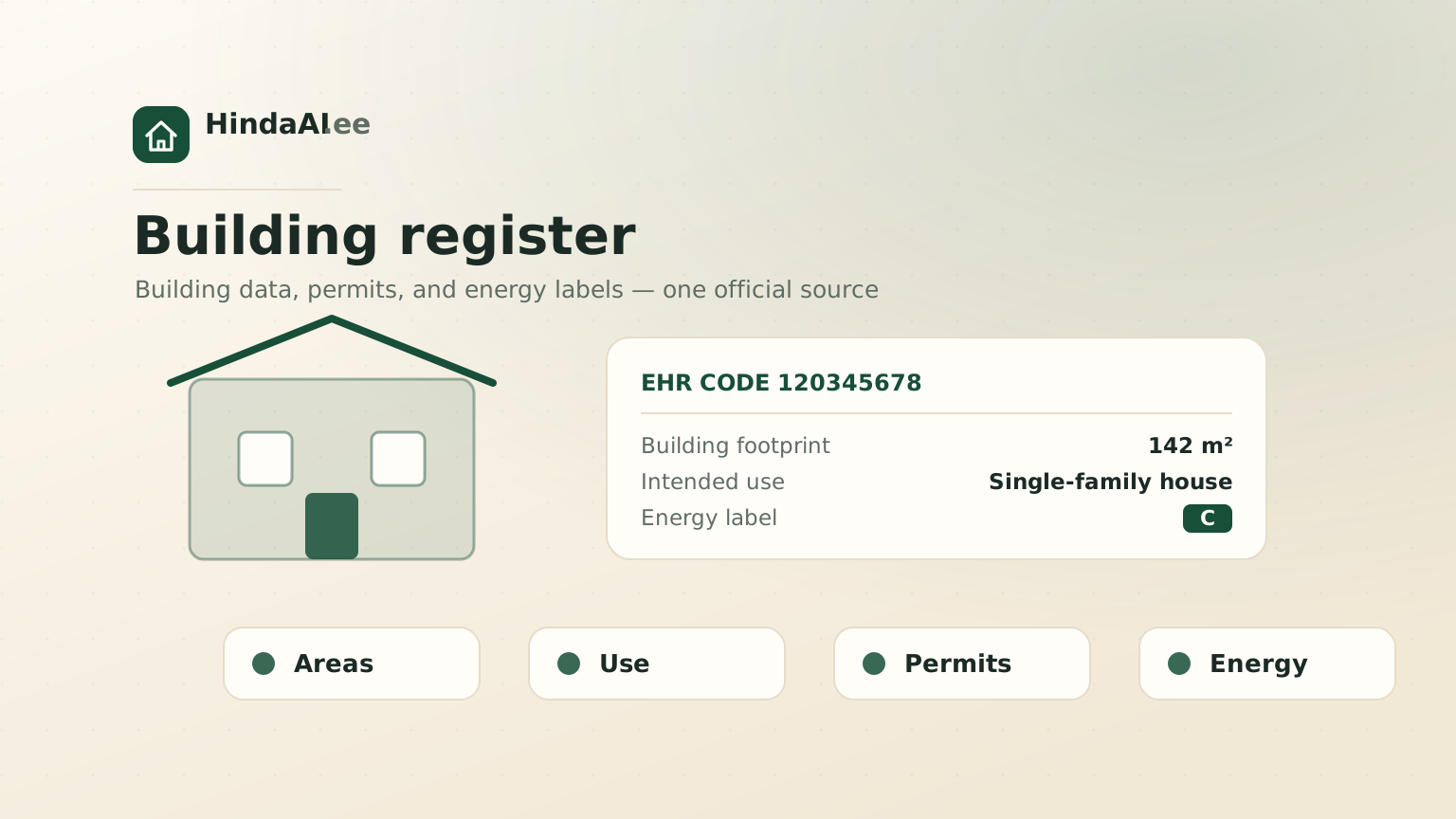
For each building you will typically find:
- general data: the EHR code, address, building footprint area, number of storeys, year of construction
- technical data: load-bearing structure material, heating solution, water and sewerage connections
- the intended use: for example a single-family house, apartment building, commercial building, or outbuilding
- proceedings: building permits, building notices, occupancy permits, and notices of use
- the energy performance certificate, where one has been issued
The public view of the register is free and requires no account. Viewing documents such as building designs requires logging in.
How to search the register
The register search works with three main keys.
By address
The most common route: enter the full address in the format used by the national address data system. If a search returns several matches, check the building type and footprint area to identify the right object. For an apartment, search for the building first rather than the unit — most data lives at the building level.
By cadastral code
If you know the cadastral unit number (katastritunnus), it surfaces every structure on the same plot, including outbuildings. This is useful for checking whether a shed or garage has been registered at all.
By EHR code
Every building has a unique register code. If you have it from any document, the code is the most precise search key, as it never changes even when addresses do.
The map view helps when the address is ambiguous: navigate to the right spot and click the building.
How to read the data
The register view is dense, and some of the terms need unpacking.
The areas are not one and the same number
The building footprint (ehitisealune pind) is the building's outline on the ground — it says nothing about the living space. The closed net area shows total interior floor area, and the heated area shows the part that is actually heated. Listing portals often quote yet another figure, the general area of the apartment ownership. Before drawing conclusions, check which area you are comparing.
The intended use determines what is allowed
The intended use (kasutusotstarve) states what the building is officially meant for. If you live in a building registered for some other purpose, that can block both a mortgage and insurance. Changing the intended use goes through the local municipality and takes time — worth knowing well before a planned sale.
Energy labels are valid for ten years
The energy performance certificate grades a building from A to H and is valid for ten years. It is mandatory when selling or renting out. An expired or missing label is not just a formality: the energy class increasingly shows up in the price, because buyers factor in heating costs and future investment needs.
Permits and notices show the legal status
A building permit or notice shows the works were authorised; an occupancy permit or notice of use shows the building was properly taken into use. Buildings erected before 1995 are treated more leniently, but later rebuilds and extensions must be reflected in the register. A missing occupancy permit is one of the most common reasons a bank declines to finance a purchase or a notary transaction stalls.
Common data errors and how to fix them
Register data comes from different eras and different sources, so errors are frequent. Typical cases:
- a building or outbuilding is missing from the register entirely
- the areas are outdated because an extension was never registered
- the intended use does not match the actual use
- the heating or technical systems were replaced years ago, but the register still shows the old setup
- there is no occupancy permit even though the building has been in use for years
Corrections go through the building department of the local municipality: submit a data correction request with supporting evidence, such as a measurement survey or old documents. Simple fixes the municipality can enter directly; more complex cases, such as an unpermitted extension, may require an audit or retroactive permit proceedings. Start early — the worst time to clean up the register is in the middle of a sale.
Why the register matters when selling or buying
For a seller, a clean register means a smoother transaction and a stronger negotiating position: the buyer has nothing to bargain with on the data front. For a buyer, the register is the fastest way to check whether the listing matches the official record — do the areas add up, does the building have an occupancy permit, and does the energy class support the asking price.
Register data is also the foundation of value. Building age, material, areas, and energy class are the inputs every serious valuation starts from. On the land side, the same logic applies to assessed land values and land tax rules, which are also built on official register data.
How HindaAI assembles the register data for you
You can always walk through the building register yourself — it is free and public. In practice, though, it means several portals: building data from EHR, land and cadastre information from the Land and Spatial Development Board, market context from Statistics Estonia.
HindaAI does that work from one address search: the free snapshot shows building data, the HindaAI score, risks, and the neighbourhood, and the full report (opening soon) ties the building register, Maa- ja Ruumiamet, and Statistics Estonia data into one interpreted view — with an estimated value and range, risk signals, and source references. You see not just what the register says, but what it means for your property's value.
Summary
The building register matters as much for property decisions as the land register does. Find your building by address, cadastral code, or EHR code, read the areas and intended use carefully, and check the permit status. If you find an error, start the correction early through your municipality. And when you want to get from register rows to value, let the data layers work for you: start with an address search and see what the official data says about your property as a whole.
Sources
- Building register (ehr.ee)ehr.ee
- Building Code (Ehitusseadustik)riigiteataja.ee
- Land and Spatial Development Boardmaaruum.ee
- HindaAI methodologyhindaai.ee
Prepared by HindaAI Team · Reviewed by HindaAI Editorial Review · Published July 17, 2026 · Updated July 17, 2026